
In the world of automotive engineering, the choice of suspension systems plays a crucial role in performance, especially in racing applications. Among the various types of suspension setups, the Double Wishbone and MacPherson designs stand out due to their unique capabilities in managing force and improving handling. Understanding the mechanics behind these two systems can provide valuable insights into their advantages and limitations on the racetrack.
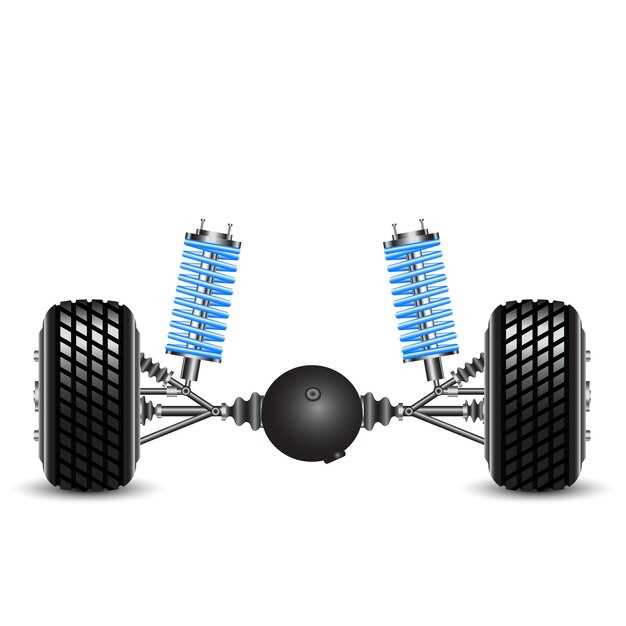
The Double Wishbone suspension system is engineered to offer greater wheel control and adaptability under high-load conditions, making it a favorite for many performance cars. This design employs two parallel arms, or wishbones, to provide a multi-dimensional control of the wheel’s movement. As a result, it can effectively manage the forces exerted during cornering, braking, and acceleration, thereby enhancing traction and stability.
On the other hand, the MacPherson suspension is known for its simplicity and compactness, often utilized in front-wheel-drive vehicles. Although it may not possess the same level of adjustability as the double wishbone system, it has proven to be efficient in managing force in a straightforward manner. The MacPherson setup provides decent handling characteristics while keeping manufacturing costs and complexity low, making it a popular choice for many racing teams.
Impact of Suspension Types on Cornering Force Performance
The suspension system of a vehicle plays a crucial role in its overall performance, particularly in racing scenarios where cornering force is vital. Two prominent types of suspension systems are the double wishbone and the MacPherson strut. Each design significantly influences how a vehicle handles during high-speed cornering.
A double wishbone suspension configuration allows for better control of the wheel’s camber angle during cornering. This feature helps maintain optimal tire contact with the road surface, enhancing grip and increasing cornering force. The independent movement of the upper and lower arms enables precise tuning of suspension geometry, leading to improved stability and predictability during tight turns. As a result, drivers can push their vehicles to higher limits without losing traction.
In contrast, the MacPherson strut suspension is simpler and more compact, which can lead to weight savings and reduced complexity. However, this design typically offers less control over camber changes during cornering. As the suspension compresses, the strut can introduce undesirable camber changes, limiting the effective cornering force. While MacPherson setups are often favored for their cost-effectiveness and ease of packaging, they can compromise high-performance cornering in racing environments.
Ultimately, the choice of suspension type directly impacts cornering performance. Vehicles equipped with double wishbone systems tend to exhibit superior cornering capabilities due to enhanced tire traction and better handling characteristics. Conversely, while the MacPherson strut may provide adequate performance for everyday driving, it may not meet the rigorous demands of competitive racing.
In conclusion, understanding the impact of suspension types on cornering force performance is essential for achieving optimal vehicle dynamics in racing applications. Each suspension design presents unique advantages and limitations, making the selection process critical for teams aiming to maximize their racing potential.
Structural Advantages of Double Wishbone for High-Speed Racing
The double wishbone suspension system has become a preferred choice in high-speed racing due to its structural advantages. This design features two parallel control arms (the upper and lower wishbones) that provide enhanced stability and control over the wheel’s movement. This layout allows for more precise handling, which is crucial at high speeds where every millisecond counts.
One significant advantage is the ability to manage the forces acting on the tires more effectively. In a double wishbone setup, the geometry can be optimized to keep the tires perpendicular to the road surface during cornering. This optimization reduces tire wear and increases grip, allowing for better cornering performance and faster lap times.
Moreover, the double wishbone system can accommodate adjustable camber settings, enabling engineers to tune the suspension for specific racing conditions. By altering the angle of the tires, teams can maximize contact patches, improving traction as forces change dynamically with speed and course layout.
In terms of structural integrity, the double wishbone suspension distributes forces more evenly across the vehicle chassis. This reduces the likelihood of flex or unwanted movement, which can compromise handling and safety at high velocities. The robust nature of this design supports aggressive driving styles and high-performance applications, offering a competitive edge in racing environments.
Overall, the structural advantages of double wishbone suspension, including its superior force management and adjustable parameters, make it an optimal choice for high-speed racing scenarios, delivering enhanced performance and driver confidence on the track.
Practical Applications of MacPherson Suspension in Competitive Racing
The MacPherson suspension system has been widely adopted in competitive racing due to its unique characteristics and practical advantages. This design, known for its simplicity and efficiency, allows for minimized weight while maintaining effective handling dynamics. This weight reduction is crucial in racing, where every ounce counts towards achieving optimal performance.
One of the primary applications of MacPherson suspension in racing is in the management of cornering forces. As vehicles navigate turns, the suspension system plays a critical role in maintaining tire contact with the road surface. The vertical wheel movement allowed by the MacPherson setup enables better traction during cornering, thus enhancing the car’s ability to sustain higher speeds through bends. This directly translates to improved lap times and overall competitiveness.
Another significant advantage of MacPherson suspension lies in its adaptability to various racing types. Its compact design can easily accommodate different tire sizes and aerodynamic packages, making it suitable for road racing, rallying, and touring car competitions. This versatility allows teams to optimize their suspension settings for specific racing conditions, thereby maximizing the vehicle’s performance across diverse tracks.
Additionally, the MacPherson suspension system facilitates more straightforward adjustments to camber and toe angles compared to other suspension types. These adjustments help teams fine-tune their vehicles to handle different cornering forces and improve tire wear, essential factors that determine success in prolonged races.
Furthermore, the ease of maintenance associated with MacPherson setups allows racing teams to execute quick repairs and modifications between heats. This flexibility is vital in competitive environments where time is of the essence, enabling teams to stay in the race and react to changing track conditions swiftly.
In conclusion, the practical applications of MacPherson suspension in competitive racing extend beyond mere design efficiency. Its ability to manage cornering forces, adapt to various racing types, allow for easy adjustments, and provide maintenance advantages positions it as a preferred choice among racing professionals seeking to enhance their vehicle’s performance on the track.


